
Magnificent cliffs, golden sandy beaches, picturesque villages, and a rich culture - the sun-kissed Algarve in southern Portugal offers something for every taste. Each year, more than 4 million visitors are drawn to the southern coast of Portugal, bordered by the Atlantic Ocean, a true paradise for surfers, hikers, and golfers. Tourist hotspots with clusters of holiday villas and chic resorts offer action-packed activities as well as vibrant nightlife with stylish beach bars and fiery nightclubs. For those seeking tranquility, the lagoons of the protected Ria Formosa Natural Park, inhabited by waterbirds, provide a peaceful retreat. In the hilly hinterland, historic cities and a long-distance hiking trail await hiking enthusiasts.
The holiday region of Algarve stretches over 160 kilometers along the southern coast of Portugal, bordered by the Atlantic Ocean to the south and west, and by the Alentejo province to the north, characterized by impressive cliffs, golden beaches, and picturesque coves. The inland areas impress with gentle hills, rivers, and valleys where olive groves and orange orchards thrive.
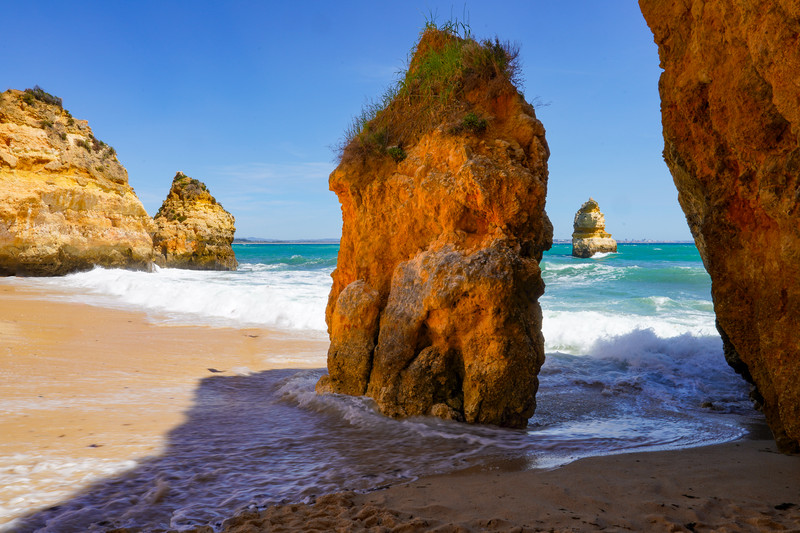
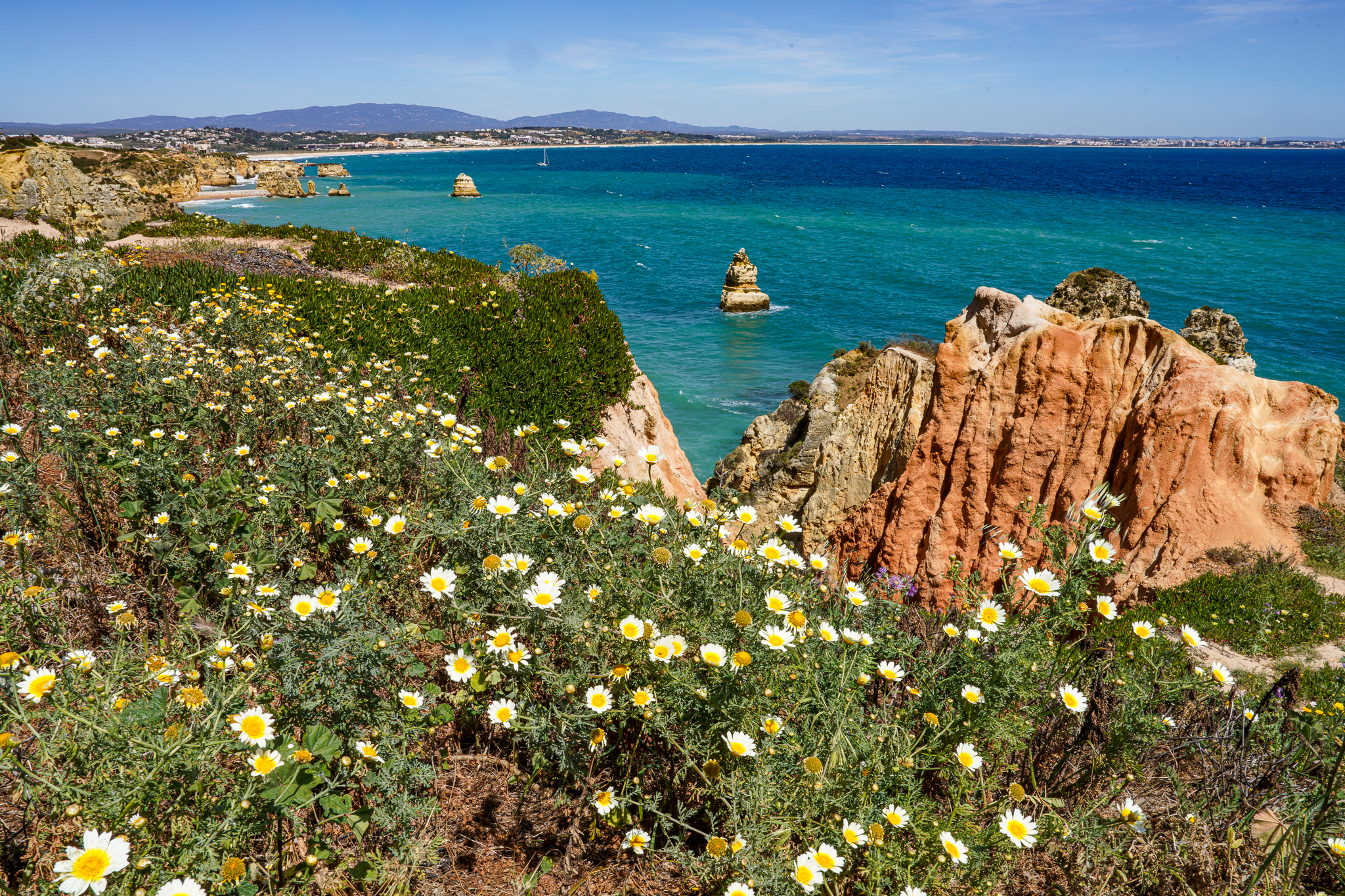
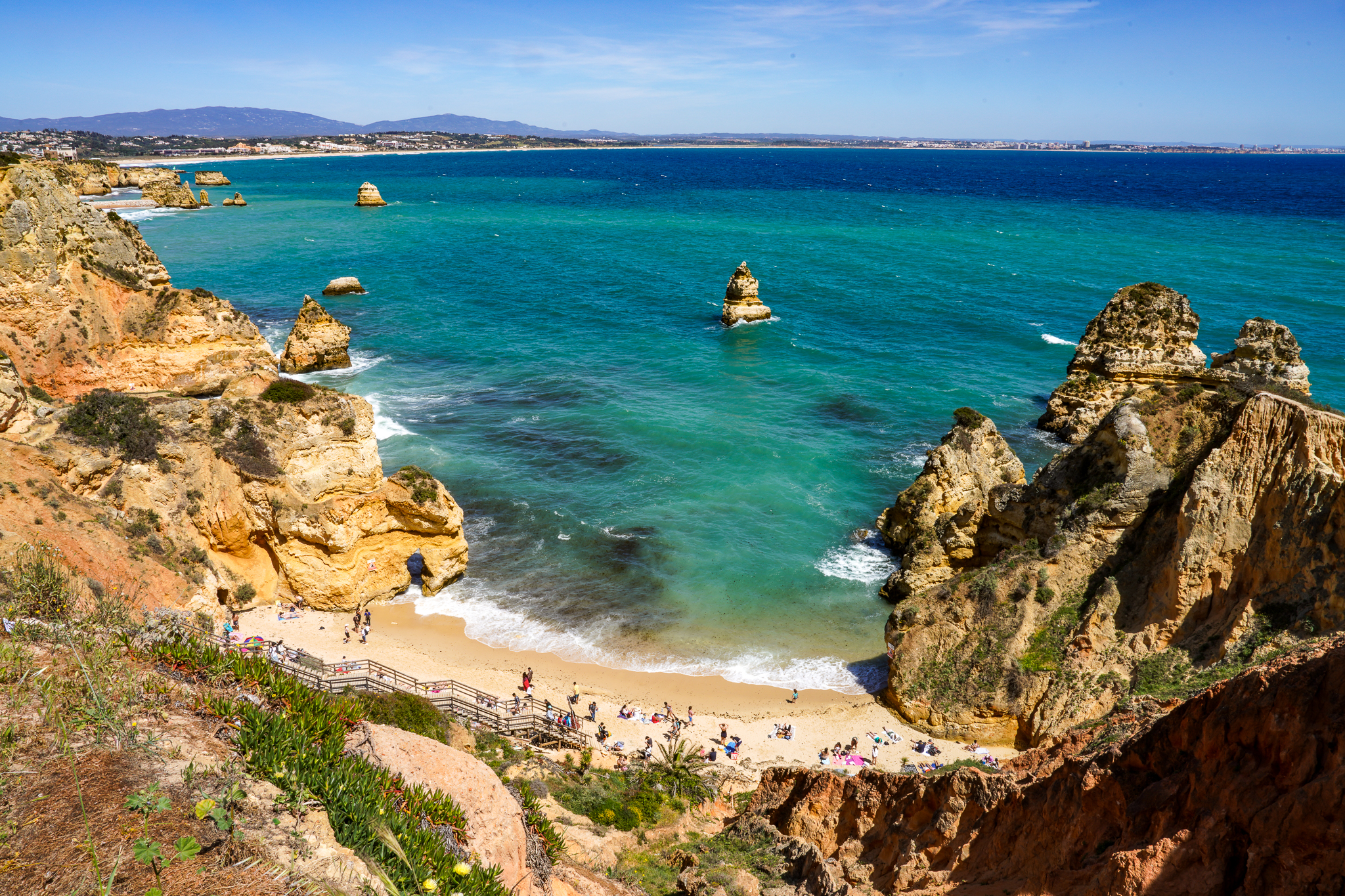
To explore all facets of the Algarve, renting a car or camper is recommended. Many vacationers have discovered the advantages of a rolling hotel, and especially in the Algarve, numerous campsites offer good accommodation options. For those who prefer a more stationary option, the lively and cosmopolitan town of Lagos is recommended, with its numerous coves and beaches nearby. In addition to the many beautiful beaches, Lagos also features historical sites such as the impressive Baroque Church of Santo Antonio or the former slave market site. The city walls, which surround a large part of the historic center, are also worth a visit. For most visitors, it is primarily the beaches that are of interest. The most famous and visited beaches around Lagos are the long and wide Praia Meia beach as well as the coves of Praia de Dona Ana, Praia do Camilo, and Ponta da Piedade cape. The latter extends with its bizarre rock formations, numerous caves, and turquoise waters far into the Atlantic. Boat tours to the cape are offered from Lagos. Smaller boats also depart directly from the cape. From the parking lot above the cliffs, there are about 190 stone steps leading down to Ponta da Piedade. If you enjoy action and adrenaline, a guided kayak tour or a session of stand up paddleboarding might be just right for you. In small groups, you can explore this beautiful coastal landscape. Some tours even offer the opportunity to snorkel in the clear water. A three-hour culinary tour through the city with an express course in Portuguese cuisine is also popular.
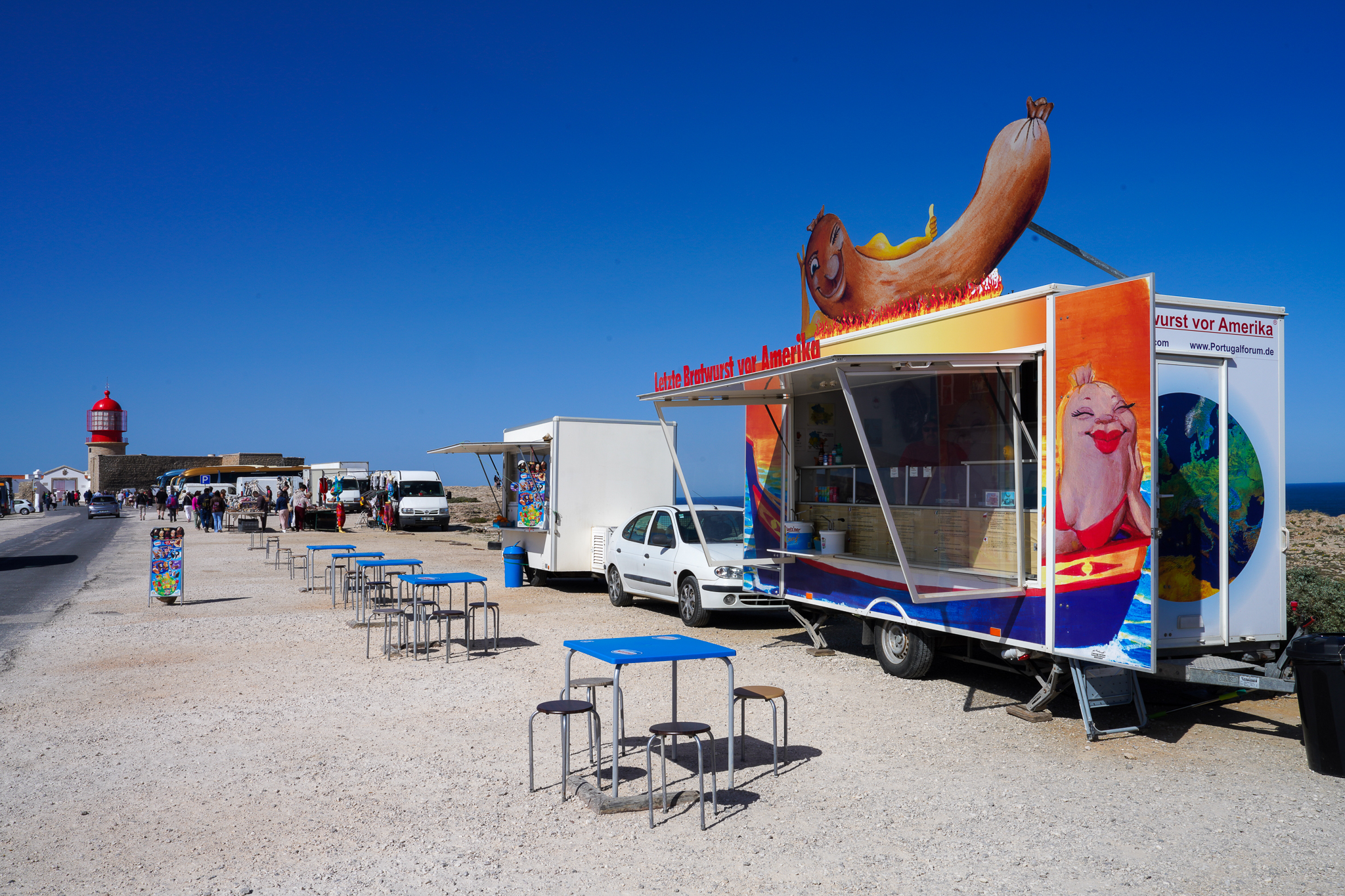
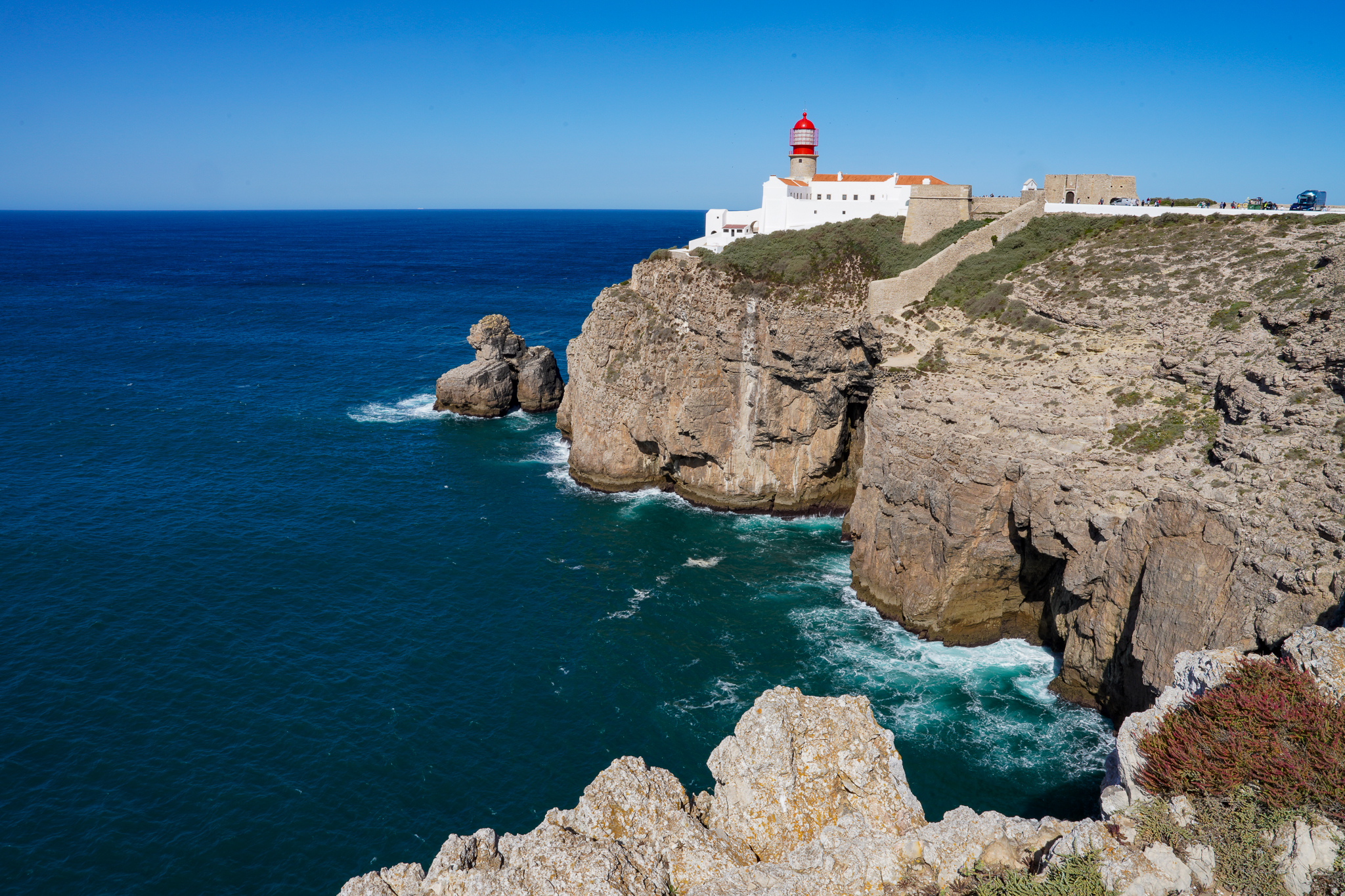
About a 30-minute drive from Lagos is Sagres, located in the southwestern tip of Portugal. The town is characterized by steep cliffs, rugged Atlantic winds, and high waves, attracting (kite) surfers in droves. For those interested in culture, we recommend the Fortress of Sagres, known as Fortaleza de Sagres. According to legend, it is here that Prince Henry the Navigator established his school of navigation. A few kilometers further, at Cabo de São Vicente, you'll reach the southwesternmost point of Europe. Here, steep cliff faces plunge into the wild Atlantic Ocean, waves crash against the rocky end of Europe, and the spray strikes the wanderlust-stricken traveler gazing westward. And somewhere in the air, the scent of grilled sausages wafts... grilled sausages? Yes, you read that right, because here, at the southwestern tip of Europe, stands the German sausage stall, the "Last Sausage before America". When the Nuremberg couple Wolfgang and Petra emigrated to Portugal in 1995 with their belongings to realize their dream of owning a German sausage stand on the Algarve, almost everyone shook their heads and thought, "A sausage stand? In Portugal? Who needs that?!" Even nearly 30 years after their emigration, Petra and Wolfgang still sell their German sausages to travelers from all over the world.
If you're already in the area around the cape, be sure to continue a little further north. The magnificent west coast of the Algarve, also known as Costa Vicentina, is unique, wild, and romantic, exuding its own charm. Occasionally, you'll come across huge sand dunes, kilometers-long beaches, and hidden oases for surfing. No beach here is the same as another, such as the unspoiled dream beach Praia da Bordeira and the breathtaking viewpoint "Pontal da Carrapateira," located right next to it, offering a splendid view over the sea and the beach. A wooden staircase leads you down to the beach. Here, both surfing and enjoying a calm and relaxing day at the beach are equally popular.
If you're still willing and have the time to drive a bit further north, you'll come across the picturesque fishing village of Arrifana. It's located directly in a beautiful bay, surrounded by high cliffs and green hills, and is known for its laid-back atmosphere, surfing opportunities, and stunning landscape. On-site, a number of restaurants and cafes await customers, serving local dishes and fresh seafood.
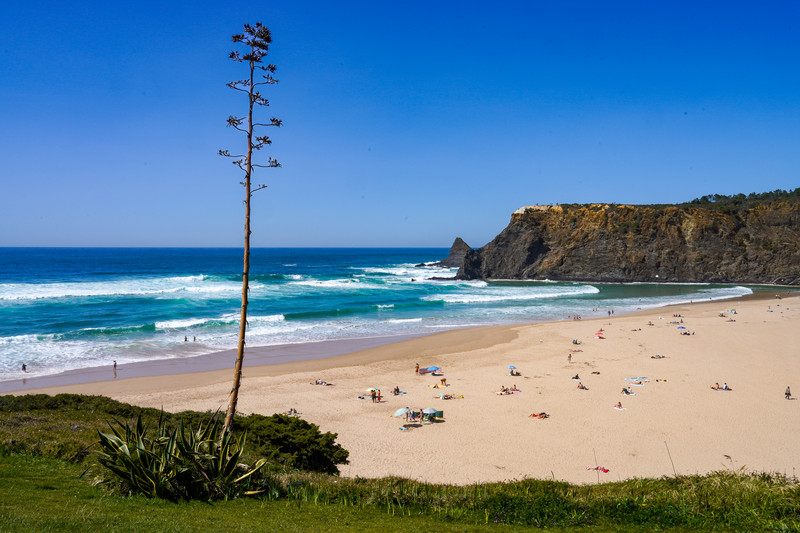
Just a bit further north, in the northernmost part of the Algarve, is the dreamy bay of Praia de Odeceixe. This unparalleled beach extends - framed by rocky hills - directly at the mouth of the Ribeira de Seixe. The river meanders around the vast expanse of sand before disappearing into the sea. In a prime location above Praia, summer cottages are positioned. The handful of local bars and cafes offer a splendid view of the sea, the beach, and the river mouth.
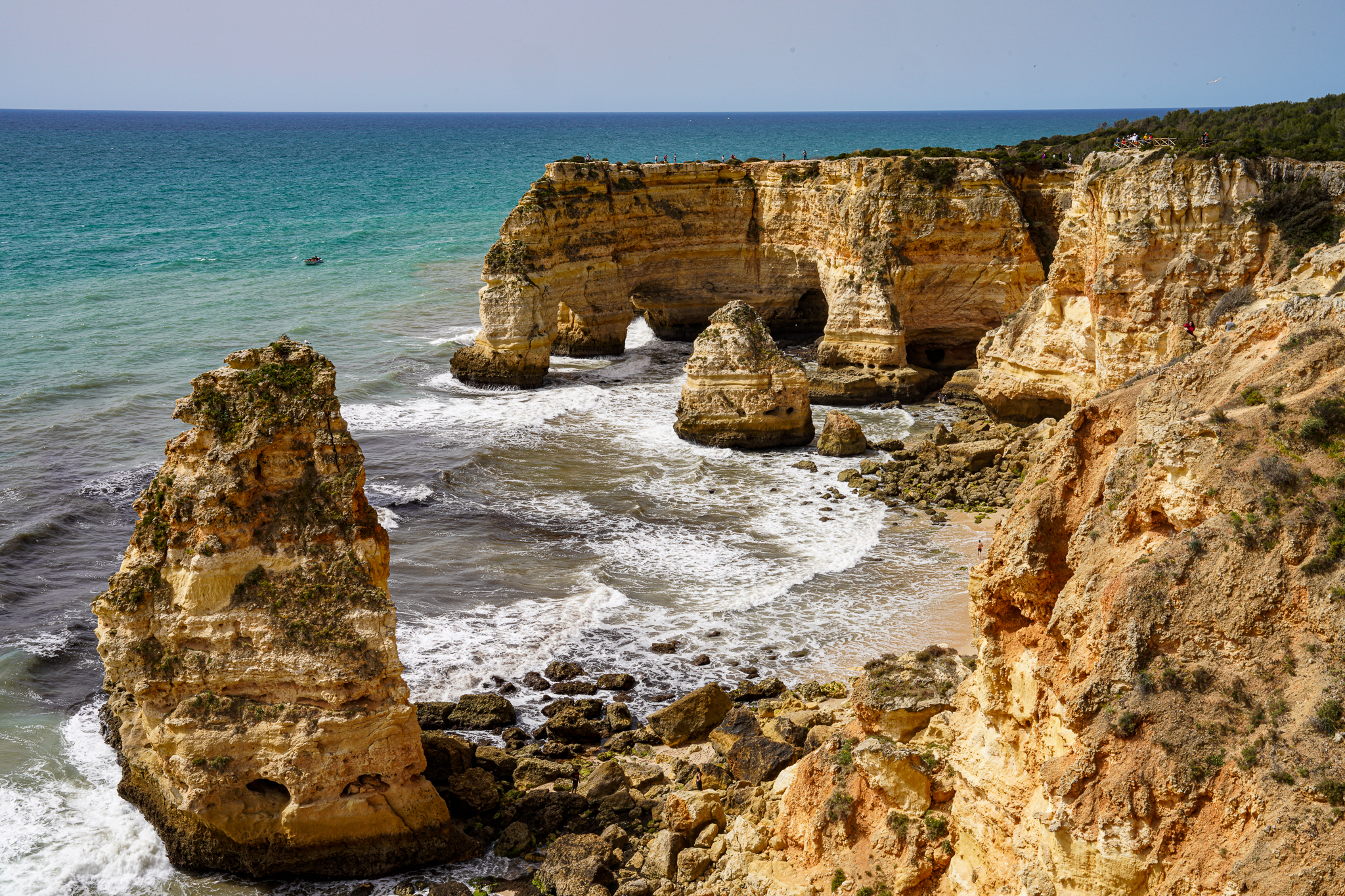
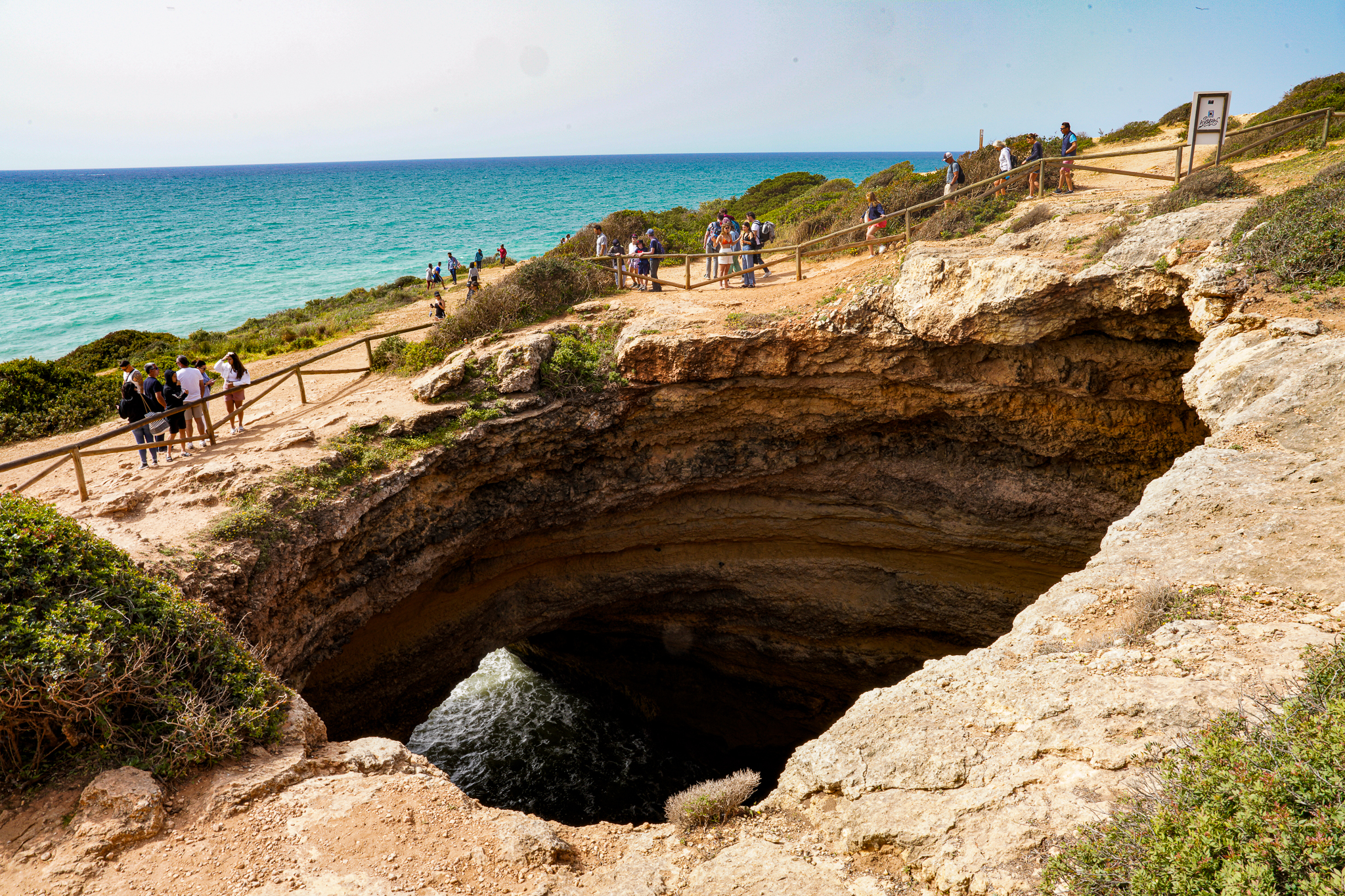
Wer nach all den Naturschönheiten urbane Abwechslung sucht, findet sie in Portimão, östlich von Lagos gelegen. In Portimão gibt es eine lebhafte Kunst- und Kulturszene mit vielen Galerien, Museen und Theatern. Die Stadt bietet ausserdem auch gute Möglichkeiten zum Einkaufen und Essen, mit einer Fülle von lokalen Märkten, Geschäften und Restaurants, die traditionelle portugiesische Gerichte und lokale Spezialitäten servieren. Von hier aus starten auch Ausflugsboote zum Instagram-Hotspot, der Höhle von Benagil. Die Naturattraktion lässt sich aber auch gut per SUP oder Kayak im gleichnamigen Ort arrangieren. Die Höhle mit offenem «Dach» zählt zu den beliebtesten Attraktionen an der Algarve. Mittags fallen Sonnenstrahlen durch den grossen Durchbruch in der Decke und lassen die Felsformationen in der Höhle golden schimmern. Kein Wunder, dass tagsüber hier ganz schön was los ist. Am besten kommen Sie früh morgens, dann haben Sie Strand und die Höhle fast für sich alleine. Oberhalb der Felsen gibt es ausserdem einen Wanderpfad, der Ihnen die Möglichkeit bietet, von oben in die Benagilhöhle zu schauen.
Nicht weit entfernt locken der schöne Strand Praia da Marinha und die Küstenfestung Albufeira. Schon in den 80er Jahren entwickelte sich Albufeira von einem Fischerdorf zu einem wichtigen Zentrum des Badetourismus. Neben 10’000 Hotelbetten findet man hier Diskotheken, Bars, Restaurants und zahlreiche Freizeitangebote. Besonders lebendig ist es am Abend in der Rua dos Bares, der Strasse der Bars. Bestellen Sie einen «Per Se», der neue Sommertrend-Aperitif aus Lissabon.
Eines der edelsten Resortstädtchen im Süden Portugals ist definitiv Vilamoura. Hier finden Sie nicht nur beeindruckende Strände und ein wunderbar angenehmes Klima, sondern auch exklusive All Inclusive-Resorts, ein Golfzentrum und einen der grössten privaten Wohnkomplexe Europas. Im modernen Hafenbereich mit edlen Restaurants, stylischen Cocktailbars und einem schicken Nachtleben lassen es sich die Urlauber gut gehen. Wer in Vilamoura das echte portugiesische Flair sucht, wird aber enttäuscht, stehen hier doch ganz allein Luxus und Komfort an oberster Stelle.
Mehr portugiesisches Flair findet man definitiv in Tavira, der für viele bezauberndsten Stadt der Algarve. Zu den historischen Sehenswürdigkeiten gehören die auf einem Hügel thronende Burgruine, eine alte römische Brücke und Überreste von Gotik- und Renaissancekirchen. Es ist jedoch der Charme, der die Stadt sehenswert macht und sogar eine Überlegung wert, hier sein Basislager zur Erkundung der Ostalgarve aufzuschlagen, ist es doch auch nur 3 km vom Meer entfernt.
Tavira lädt seine Besucher zu ausgedehnten Spaziergängen ein. In einem Labyrinth aus Kopfsteinpflastergassen liegen grüne Gartenanlagen und schattige Plätze versteckt. Mein Lieblingsort: der Burggarten! Sobald man das Tor der Burgruine passiert, leuchtet es in allen Farben und riecht nach mediterranen Blumen. Hier blühen auf engstem Raum Hibiskusbüsche, duftende Trompetenbäume und üppige Blumenbeete.
Überhaupt, wer die Natur und den Strand liebt, findet zwischen Tavira und Faro den Parque Natural de Ria Formosa, ein Lagunengebiet mit Wattinseln, Kanälen, Salzwiesen und Sandbänken, ein wichtiger Lebensraum für seltene Tiere und Pflanzen. Auf der Ilha de Tavira mit weissen Sandstränden und sogar einem Waldstreifen, die nur über eine Fussgängerbrücke oder per Boot erreichbar ist, bieten verschiedene Veranstalter Wassersport wie Wind- oder Kitesurfen an und Strandbars laden dazu ein, einen leckeren Sundowner zu geniessen.
Wer gerne wandert, findet im Hinterland sein eigenes Paradies. Die Via Algarviana verbindet als Fernwanderweg die 300 Kilometer lange Strecke von Alcoutim bis zum Cabo de São Vicente. Die Strecke führt durch fast zwei Dutzend Gemeinden im Hinterland der Algarve – hier erleben Sie alles, was die Region kulturell und in punkto Naturschönheiten zu bieten hat: ausgedehnte Blumenwiesen, terrassierte Felder oder dichte Eukalyptus- und Korkeichenwälder. Unterwegs gibt es auf abwechslungsreichen Wanderungen zwischen der spanischen Grenze und dem Südwestzipfel Europas immer wieder malerische, kleine und verträumte Dörfer zu entdecken. Darunter zum Beispiel Vila do Bispo, das winzige Cerra das Casas mit gerade einmal etwas mehr als einem Dutzend Häusern oder São Brás. Und wenn Ihnen die Füsse schmerzen, das Meer und die wunderbaren Strände der Algarve sind nie weit weg.


Getting There:
Fly with Edelweiss Air 3-4 times a week from ZRH (Zurich) to Faro.
Getting Around:
Rent a camper from Roadsurfer to explore Portugal: https://roadsurfer.com/en-en/camper-rental/portugal/faro/
How Long Should I Go:
2-3 weeks
Best Time to Visit:
During the summer months, preferably spring or autumn.
Highlights:
Bays and beaches of the Algarve, Benagil Cave, Tavira
More Information:
For more information, visit https://www.visitalgarve.pt/en/default.aspx
Realised by Michael Bachmann
Further travel pictures under www.kissed-by-nature.com